Slider

Showing posts with label info Tamilnadu. Show all posts

Sundara Mahalingam Temple: A Glimpse into Tamil Nadu's Spiritual Splendor

 Tamil Nadu, often referred to as the "Land of Temples," is home to countless architectural marvels that stand as testaments to the region's rich cultural and spiritual heritage. Among these, the Sundara Mahalingam Temple occupies a special place. Nestled in the heart of Tamil Nadu, this temple holds not only architectural significance but also spiritual reverence that draws devotees and travelers alike.

Historical Legacy:

The Sundara Mahalingam Temple, also known as the Arulmigu Sundara Mahalingam Temple, is situated in the town of Koviloor in the Tirunelveli district of Tamil Nadu. Its history dates back centuries, making it a repository of the region's cultural and religious heritage. The temple's foundation is rooted in the vibrant mythology and history that characterize Tamil Nadu.

Architectural Marvel:

The temple's architecture is a blend of Dravidian style with intricately carved pillars, ornate sculptures, and towering gopurams (entrance towers). The grandeur of the temple complex is a sight to behold, with its intricate carvings depicting tales from Hindu epics and showcasing the artistic mastery of the artisans of yore.

Spiritual Significance:

The Sundara Mahalingam Temple is dedicated to Lord Shiva, one of the principal deities in Hinduism. The presiding deity, Lord Mahalingam, is depicted in a unique form that symbolizes the cosmic dance of creation, preservation, and destruction. Devotees from far and wide visit the temple to seek blessings, participate in rituals, and immerse themselves in the spiritual aura that envelops the site.

Festivals and Rituals:

The temple comes alive during various festivals, with the annual Maha Shivaratri celebration being a highlight. Devotees throng the temple to offer their prayers and witness the vibrant processions and special rituals conducted on this auspicious occasion. The temple's serene surroundings and the rhythmic chants of hymns during the rituals create an atmosphere of devotion and tranquility.

Local Influence and Community:

Beyond its spiritual significance, the Sundara Mahalingam Temple plays an integral role in the local community. It serves as a center for cultural activities, religious gatherings, and social interactions. The temple acts as a unifying force, fostering a sense of belonging among residents and preserving the shared heritage of the region.

Preservation and Legacy:

Efforts to preserve the Sundara Mahalingam Temple's heritage are essential to ensure that future generations can continue to experience its splendor and spiritual essence. Local organizations and devotees play a vital role in maintaining the temple and its surroundings, ensuring that its legacy remains intact for years to come.

Conclusion:

The Sundara Mahalingam Temple is more than just a structure of stone and mortar; it's a living testament to Tamil Nadu's spiritual and artistic heritage. With its awe-inspiring architecture, rich history, and deep spiritual significance, the temple stands as a beacon of devotion and a repository of cultural pride. As visitors step into its sacred precincts, they are transported to a realm where the past and the present converge in a tapestry of faith and reverence.

Siruthonda Nayanar - Shiva bhakta - 63 Nayanmars

 One of the 63 Nayanmars held in great regard by Saivism is Siruthonda Nayanar. It should be noted that he was a subordinate of Narasimha Pallavar, the general who overthrew Pulikesi II. In Tiruchengotangudi, Kaveri Valanat, Paranjothiyar was conceived in the clan of his maternal brothers. He received lifelong instruction in the scriptures, literature, and arts. He is also an accomplished rider of horses and elephants. He came to understand that contemplating and appreciating Shiva's art is the true virtue as he continued to study the spiritual arts nonstop. He naturally prefers to sort things out. 

Under the Pallavas, Narasimha led the troops and was revered by the king. For the benefit of the monarch, he invaded the north, destroyed the city of Vadabi, and brought to Tamvendan a variety of valuables, wealth, elephants, horses, and other animals. The monarch was in awe of his valour. The officials who had a good understanding of Paranjothiyar at the time exclaimed, "O king!" They claimed that no one could defeat him in combat because he is motivated by the desire to show kindness to Lord Shiva. When Vendan heard the news, he said, "Don't feel like Umber Bran's servant; I have done bad work; I had left him on the front lines of battle, said to Paranjothiyar, Emperuman; I have to admit my error."

Before His Highness and Paranjodiyar, the King kneeled and cried, "O King! I'll complete my job duties. What damage is there in that? The Arampuri king, Vendan, worshipped him and said, "You have managed the condition of your kingdom in such a way that you are not ashamed." He also gave him rich wealth and good territory for long-term development. He bid farewell and said, "From now on, you will compose music for your mind."

After saying goodbye to Mannavan, Paranjothiyar travelled to Tiruchengatangudi, where he lived. The Lord Shiva had received presents from Lord Ganapaticharat there. Thiruvengadu Nangai was his wife. Every day after offering tiruvamudu to Lord Shiva, he used to conduct manayaram with Nangaiyar before eating. Because of his humility and modesty, Paranjodiyar was known as "Chiruthondar" and loved and worshipped the Sivanadiyars. He saw Siralathevar as an incarnation. Appillai was enrolled in school when he was five years old. Thrunnasambandhap Pillaiyar went to Thiruchentangudi to honour the Lord on that day. With the best grandson and the friend, the man's offspring also relished their time with them to the hilt. In the song "Baingotu Malarpunnai," he sang Siruthondar as Lord Ganapathichara in Tirupathika.


Aththi varathar - A lord who gives Darshan once in 40 years

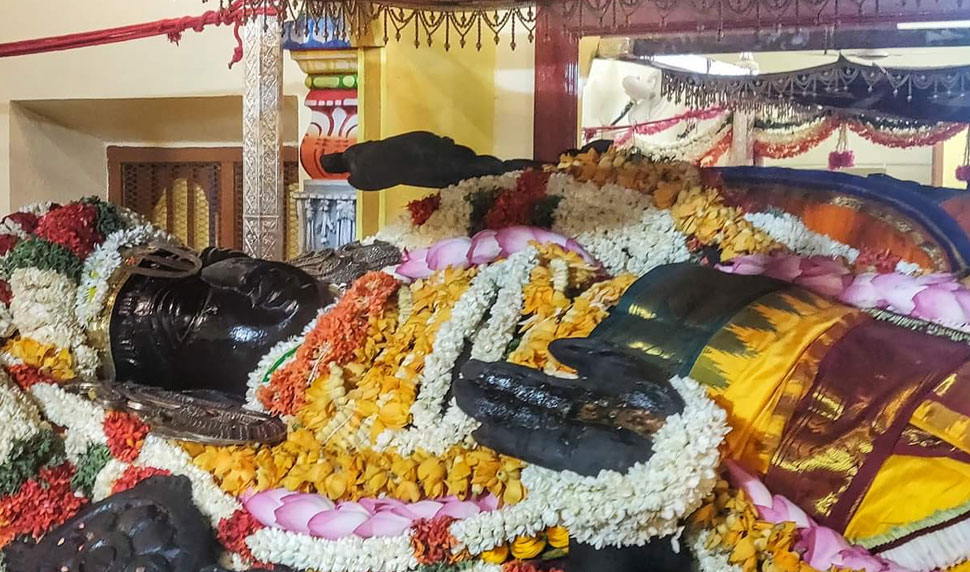
AththiVarathar - a lord in the Varadharaja perumal temple, Kancheepuram, India is with mythological theories around and gives Darshan once in 40 years. The idol of this Lord is a 9 foot high, made out of fig tree (aththi Maram) and it was kept under water in the temple pond for more than 80 years and it is now looking beautiful without much destruction. There are many mythological tales around this idol about why it was kept under water in a temple pond. One among those was during the Mughal empire, to avoid the act of ruining the idols during their invasions in south India, this deity was kept under water in the temple pond. while digging the temple pond for cleaning, people identified that and started worshiping it once in 40 years. Other tale narrates that the idol was earlier worshiped by Brahma and then by Gajendra and then by sage Brihaspathi and aadhi sesha. When Brahma performed Yagna, the fire destroyed the idol and Brahma was saddened because of this incident and asked lord Vishnu for remedy. As per the direction from Vishnu, he kept it in the pond under water. As per the wish from Aadhi seshan, lord Vishnu will shower the divine blessings every 40 years for 48 days. Whatever the tales, the fact is Aththi Varadhar was there under water for more than 80 years and gave the divine blessings during the year 1939,1979 and 2019. Today Aththi Varadhar idol will be taken back to Anandasaras mandapam  after the 48 days of divine blessings to people. An ardent devotee of Aththi varadar remembered that during 1979, when he was in early 20s, he was asked to join the team to bring Aththi Varadhar out from the temple pond.He then narrated that 2 days after the idol carried to Vasantha Mandapa, he got a stable job adds attributing this to Aththi Varadhar's blessings. We will see Aththi Varadhar again in the year 2059. Lets lord's divine showers always to us. Those who visited the Aththi Varadhar can add their experience in comments tab.

Explore India


Steel
Audacious
Lovely
Energetic
Mango
is the fifth largest city in tamil nadu. Having the name derived from the sanscrit word "Siylam" represents mountain. Salem - Chemplast Sanmar

Yerkaud is one of the hill stations in Tamil Nadu, India; which is located 30 kms from salem, showcases the realms of nature.


It takes around 45 to 50 minutes to reach yercaud from salem.


Sight seeing places in yercaud:


1) Raja Rajeshwari Temple.


2) Servaroyan Hills [ Cave Temple].


3) Gents, Ladies, Children View Point.


4) Botanical Garden.


5) Rose Garden.


6) Lake.


7) Anna Park.


8) Aluminium Oxide Ground.


Raja Rajeshwari Temple: Temple View

Rajeshwari Temple

> Located 2Km from Yerkaud Lake.


> Have a seperate history.


> Founded in 1983.


> Possess Facts of Mercury Chain.


Servaroyan Hills [ Cave Temple] :


Featured Post

Vitamin - A and why it is essential

 Can you read the below text without a reading frame during night? Hello, How are you? if you can then you have a good vitamin - A source in...

Popular posts